Osborne Clarke partner in High Court success
A senior City lawyer who was fined £50,000 after a disciplinary tribunal found he had breached regulatory rules by sending a “without prejudice” email to a former Magic Circle partner turned tax blogger has successfully overturned the decision in court.
Ashley Hurst, a partner and head of client strategy at Osborne Clarke, was sanctioned by the Solicitors Disciplinary Tribunal (SDT) in December 2023 over an email sent on behalf of his then client, former Lord Chancellor Nadhim Zahawi. The SDT found that the message to former Clifford Chance partner Dan Neidle had been improperly labelled “confidential and without prejudice”, amounting to a breach of professional rules.
At the time, Neidle had published commentary on his Tax Policy Associates blog accusing Zahawi of lying about his tax affairs. Hurst’s email arrived the same day and stated that Neidle was not entitled to publish or refer to it, other than for the purpose of obtaining legal advice.
The tribunal found that Hurst used the “without prejudice” label not to negotiate, but to suppress publication, showing a lack of integrity and a failure to meet his regulatory duties. Although the case attracted attention due to concerns about SLAPPs (Strategic Lawsuits Against Public Participation), the tribunal made clear it should not be classified as such.
The tribunal imposed a £50,000 fine on Hurst and ordered him to pay £260,000 in costs.
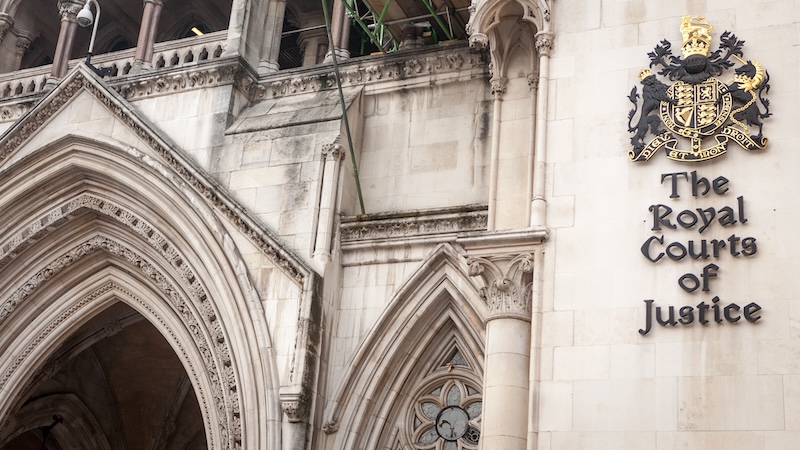
The Osborne Clarke lawyer went on to challenge the decision in the Administrative Court, where Mrs Justice Collins Rice overturned it yesterday.
In a lengthy judgment, the judge took aim at the tribunal’s reasoning, finding that it had lost sight of the regulatory questions it was required to decide. She said the SDT had adopted (largely from the SRA) an “idea of a preoccupation with secrecy and stifling a right to publish”, but had failed to scrutinise that idea properly.
That narrative, she said, was “insufficiently examined, accounted for, or evidentially supported in the tribunal’s analysis”, and had come to dominate the decision.
The judge said the tribunal had also asked itself the wrong questions. Rather than considering whether Hurst’s position was properly arguable, it had focused on whether the email was in fact confidential or without prejudice.
As the judge put it: “A properly arguable legal proposition is one that it would not be improper for a regulated professional to advance, not necessarily one that is bound to or even likely to succeed.”
She stressed that solicitors are entitled to advance weak or contestable arguments on behalf of their clients, particularly at the pre-action stage, and that professional misconduct only arises where a position is “legally unrecognisable”.
The judge was also critical of the tribunal’s findings on Hurst’s motives and integrity, including its conclusion that he had “fabricated” legal obligations and acted solely to suppress publication. She held that those conclusions went beyond the allegations the tribunal was required to determine and were insufficiently examined, giving rise to a real risk of unfairness.
Commenting on the decision, Hurst said:
“I’m relieved to have been exonerated by this comprehensive judgment. A big thanks to my excellent legal team, my colleagues and the many around the legal community who stood behind me during this long and stressful episode.”
Meanwhile, a spokesperson for Osborne Clarke added: “We are delighted with this result and appreciate the Judge’s careful analysis in this important decision.”
As for Zahawi, he was sacked from his cabinet roles in January 2023 after it emerged that he had paid almost £5 million to HMRC to settle his tax affairs while serving as chancellor, without disclosing the investigation — a breach of the Ministerial Code. Earlier this month, Zahawi confirmed that he had left the Conservative Party to join Reform UK.